Building date: 1820's or 1830's
Original use: Residence
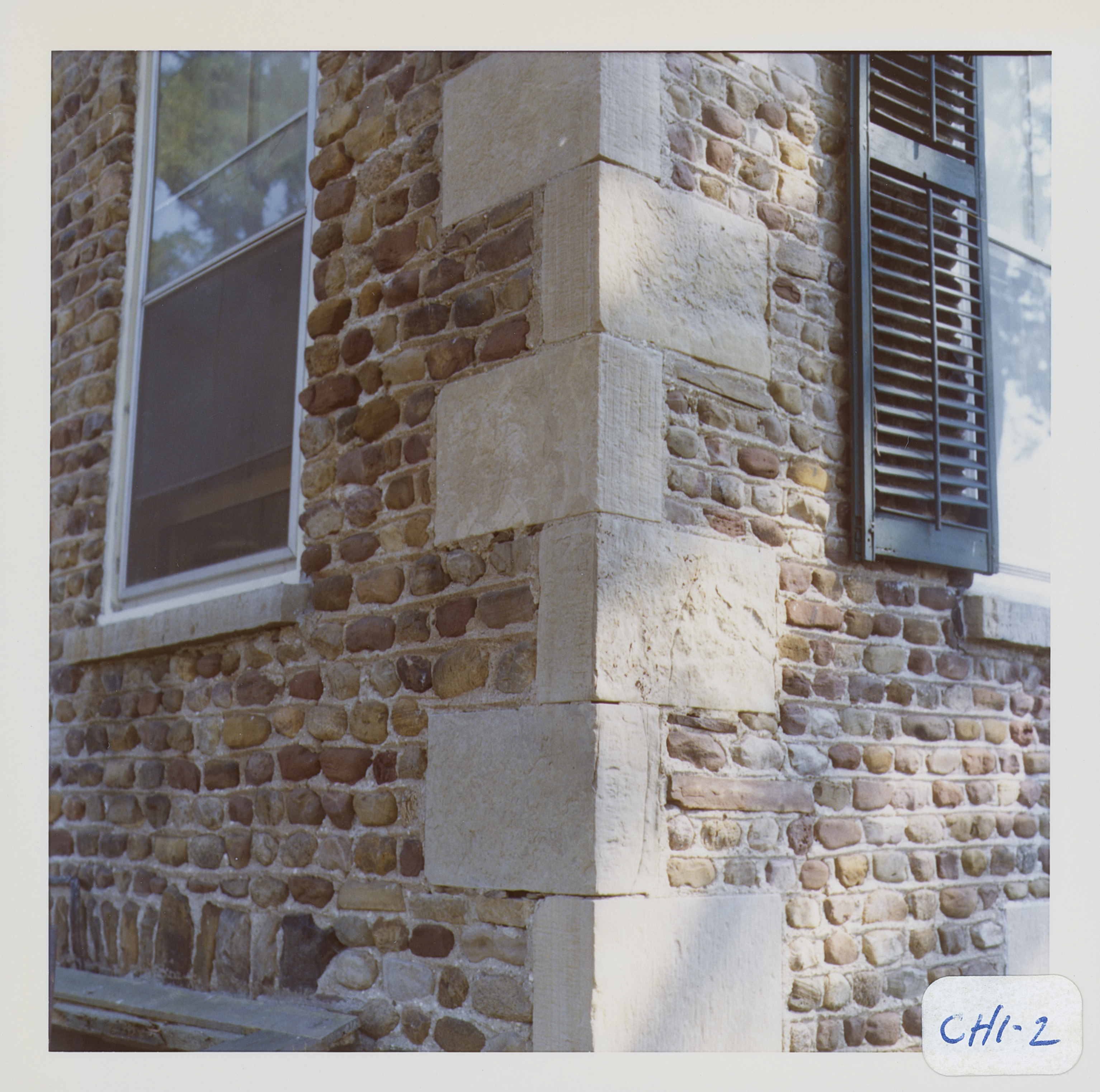
Corner structures:
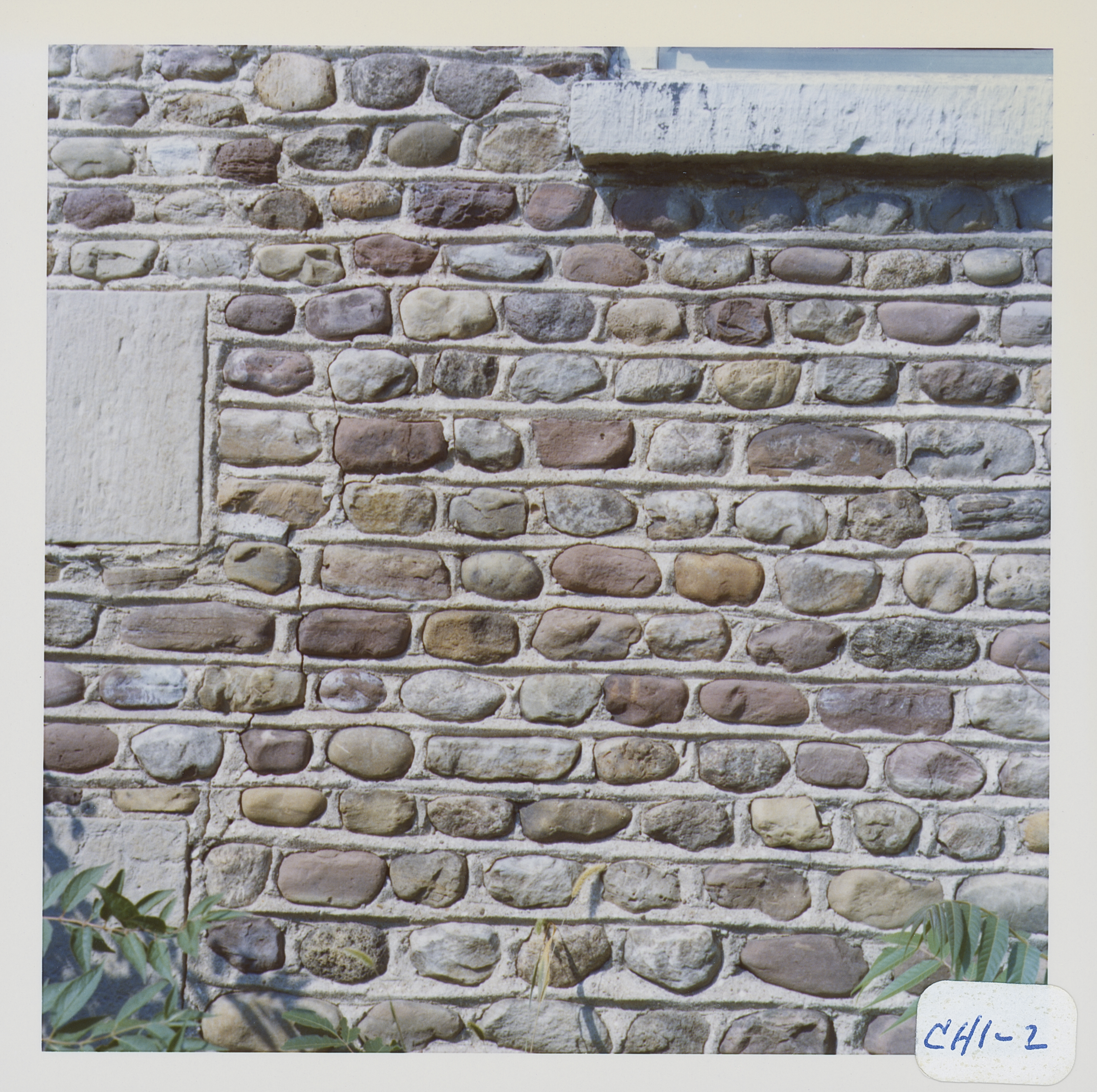
Mortar application and content: Vertical heavy
Types and uses of stones:
Types and choice of windows:
Structures with similar masonry details: Chi-3, Chi-4, Chi-5, Rig-1, Rig-2
Masons who worked on building:
Unique features:
Map views courtesy Google Maps. Address is Google Earth confirmed; 43°02'20.02"N 77°46'43.78"W. Current owner of record, Fisher as of 2018 Tax Roll.
Town of Chili and Monroe County Maps
Samuel Pope, who had the house built, was my great-great-great-grandfather. He was descended five generations from Joseph Pope who had arrived to Salem in the Great Migration of the 1630's and who had converted to Quakerism in its early days. Samuel (1773-1860) and his wife Mary (1783-1859) came to western New York from Falmouth, Maine. They first bought land, about 135 acres, in 1826. The price was relatively high so I assume that it was already a farm with the land cleared and possibly some structures. In 1828, they bought another parcel of about the same size, contiguous to the first parcel. I don't know what his livelihood in Maine had been but he seems to have brought some capital with him to New York. I would guess the house to have been built in the 1830's. I think it's quite handsome and refined. It is also rather large - I estimate that it is about 2500 square feet on two floors. It may not have seemed all that large as they had 10 children.
Samuel and Mary Pope, presumably taken in the 1850's.
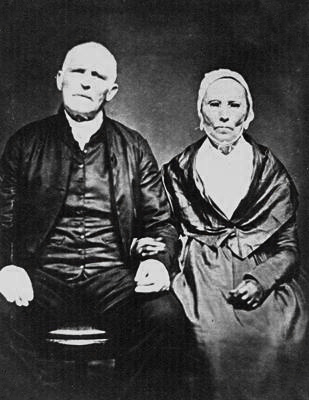
Your documents say that they left the area in 1832. They did not and, in fact, are still in the area, in the Quaker cemetery about two miles from the house.
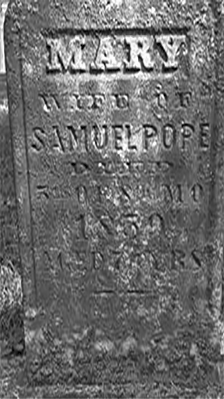
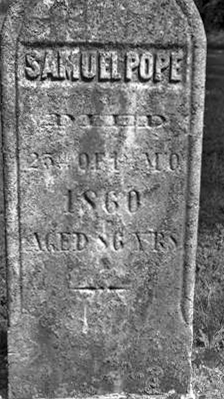
In 1832, Samuel purchased a small property in the center of Scottsville adjacent to a small stream or canal. There is no evidence that any structure was ever built there. In 1851, when he was 78 years old, Samuel deeded all his farm property to his son Joseph. In 1860, after the death of Samuel, all the property passed from any Pope ownership. I am not clear on this but it may be that, by previous agreement with his father, Joseph had to liquidate the property to pay out inheritance money to his siblings.
Almost none of the above is old family lore. Most of it is from my own research, and draws significantly from Monroe County land records and from my brief visit with Barbara Chapman [who was then the Wheatland Township historian]. I have a picture of the front of the house taken by my grandfather in 1956. My mother, who was living near Rochester at the time, drove down with a friend one day in 1990. She took a few pictures, one of which shows a metal stove chimney coming out through the front entry sidelight and going straight up. My wife and I saw the house in 2013. The condition of the house was just too dreary and depressing. I just now looked at the current Google street-view, taken only two months ago and it does not appear to have improved at all.
If you are wondering, I am not a Quaker. Samuel and Mary's son, Samuel Wing Pope, married Helen Ruth Avery, who was not a Quaker and so he was automatically "disqualified." They were my great-great grandparents.
Courtesy Jeff Bludeau, email 9/22/2021
"The Cobblestone Houses of Upstate New York", compiled by Dorothy Wells Pease. Research done in collaboration with Hazel B. Jeffery, supplemented with material furnished by Carl F. Schmidt. Reference the ninth paragraph on page 11.
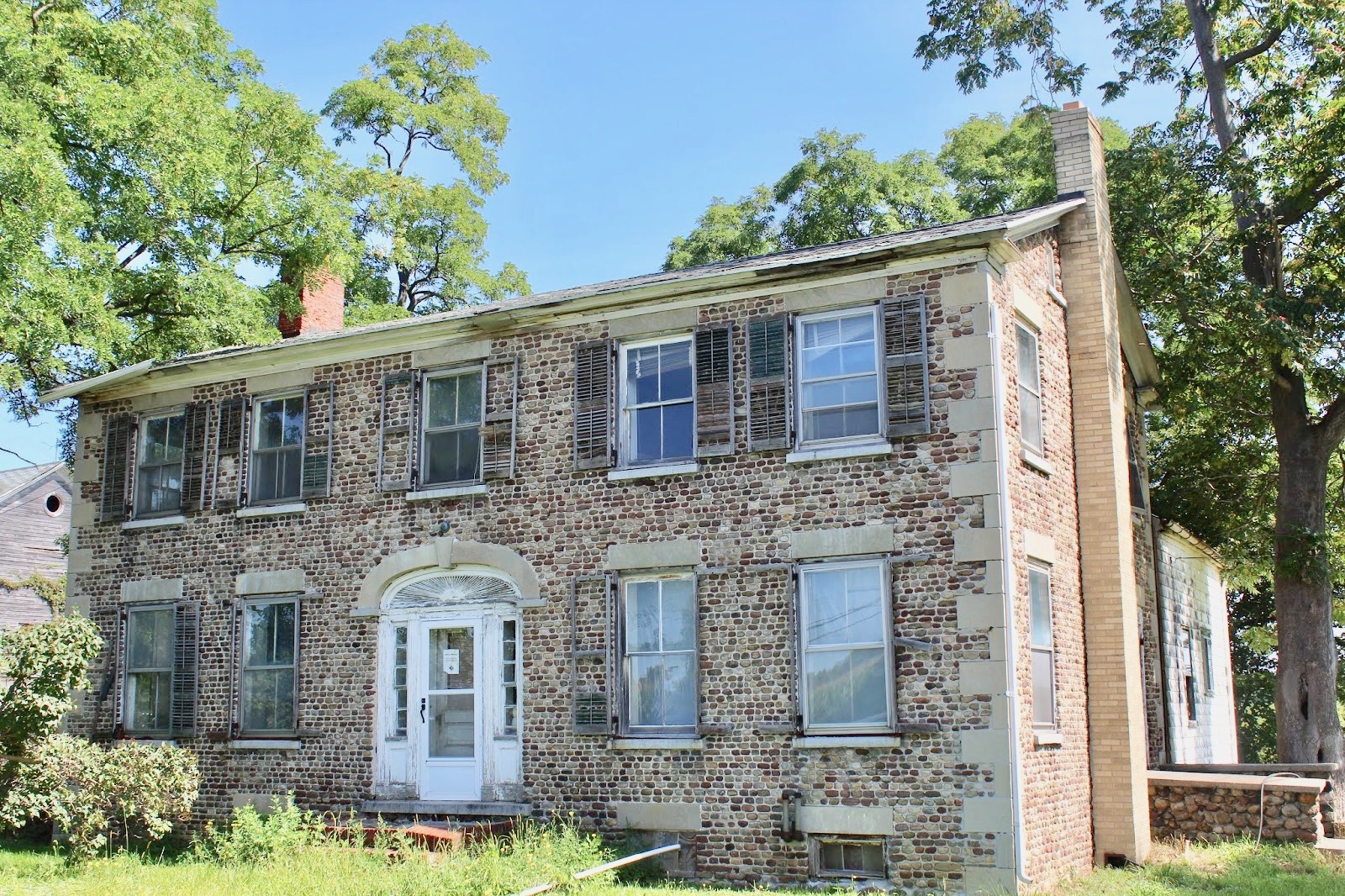
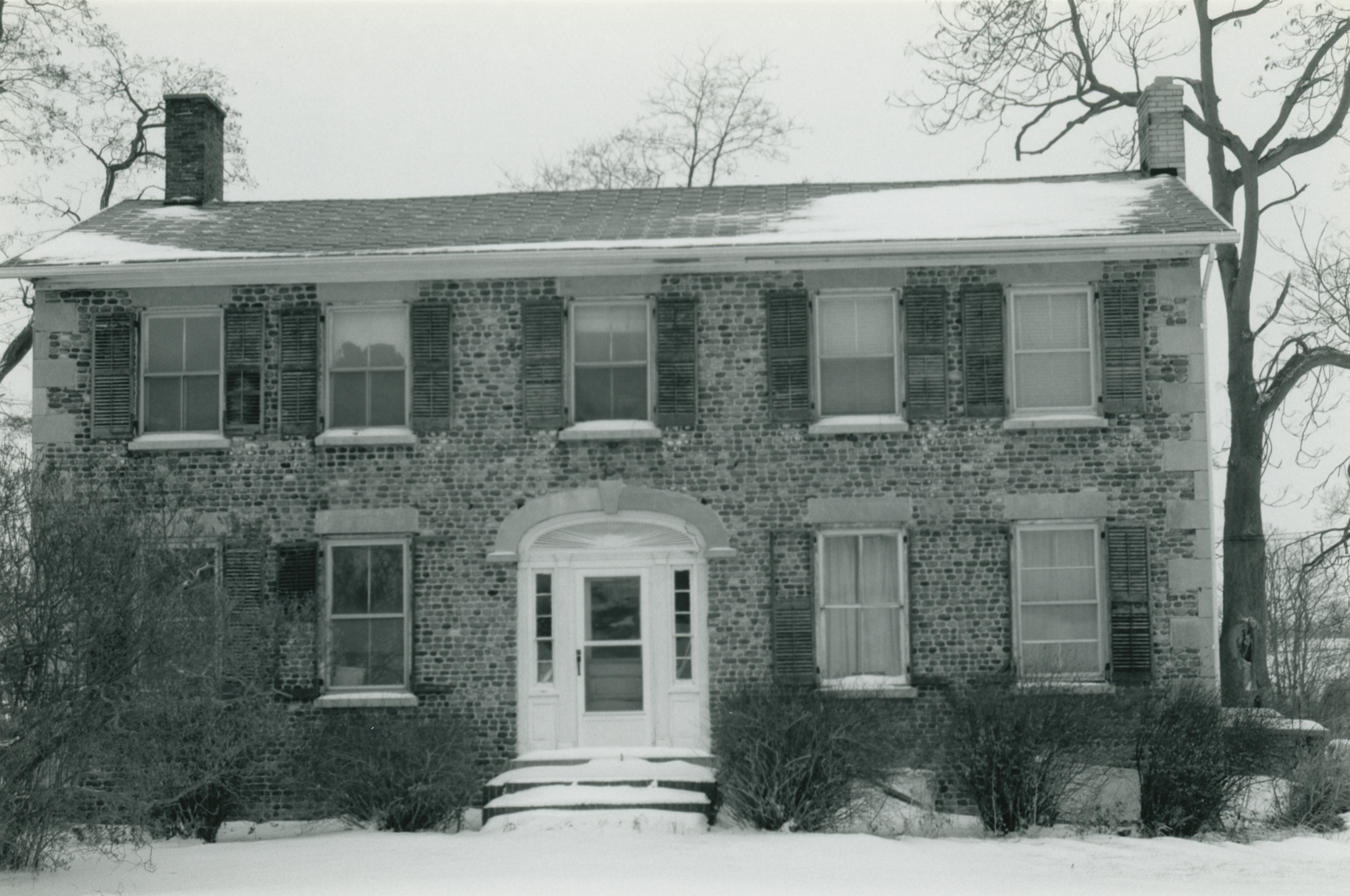
Samuel Pope, a Quaker from Maine built the house in the middle 1820's according to a bit of oral tradition. There is no documented date, but interior and exterior details would not place it later than 1830's. William Slater, one of the carpenters, married Caroline Pope, Samuel's daughter.
The house has been in at least five families:
- Samuel Pope. Left area in 1832. Then ???? Editor's Note: See Jeff Bludeau documentation above.
- Later the Raphertys, a wealthy family of Scottsville who owned several farms and a wagon building business.
- Wm. Murphy was born here. His father purchased the property after several years as a tenant. Mr. Murphy owner to 1943.
- Mr. Guy Michael, 5 years from 1943 (Barclay or Barkley (?), tenants at time).
- Mr. Abe Fisher (from Poland), April 1948-1970's. Current owner (as of September 2019) is David Fisher.
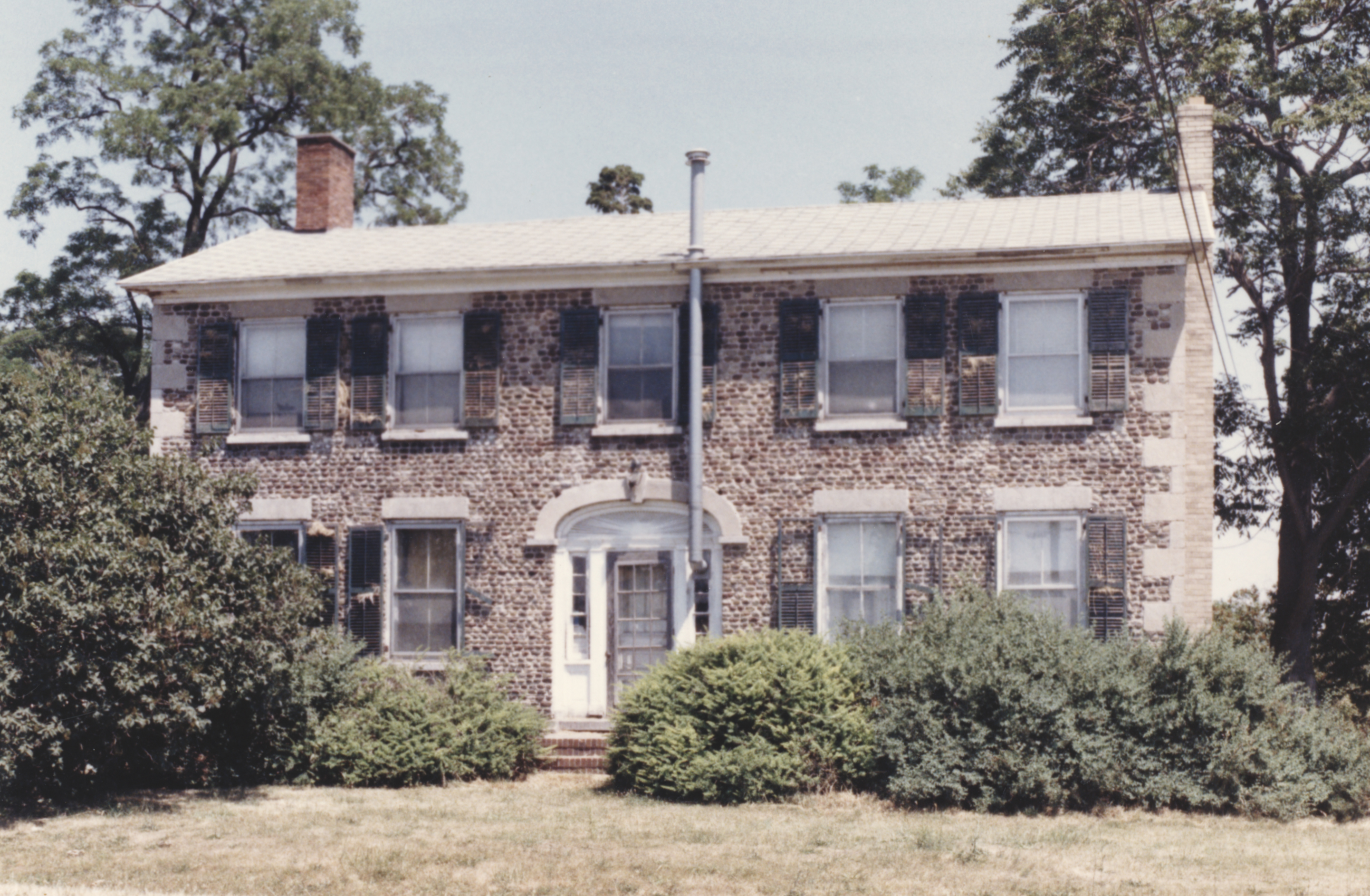
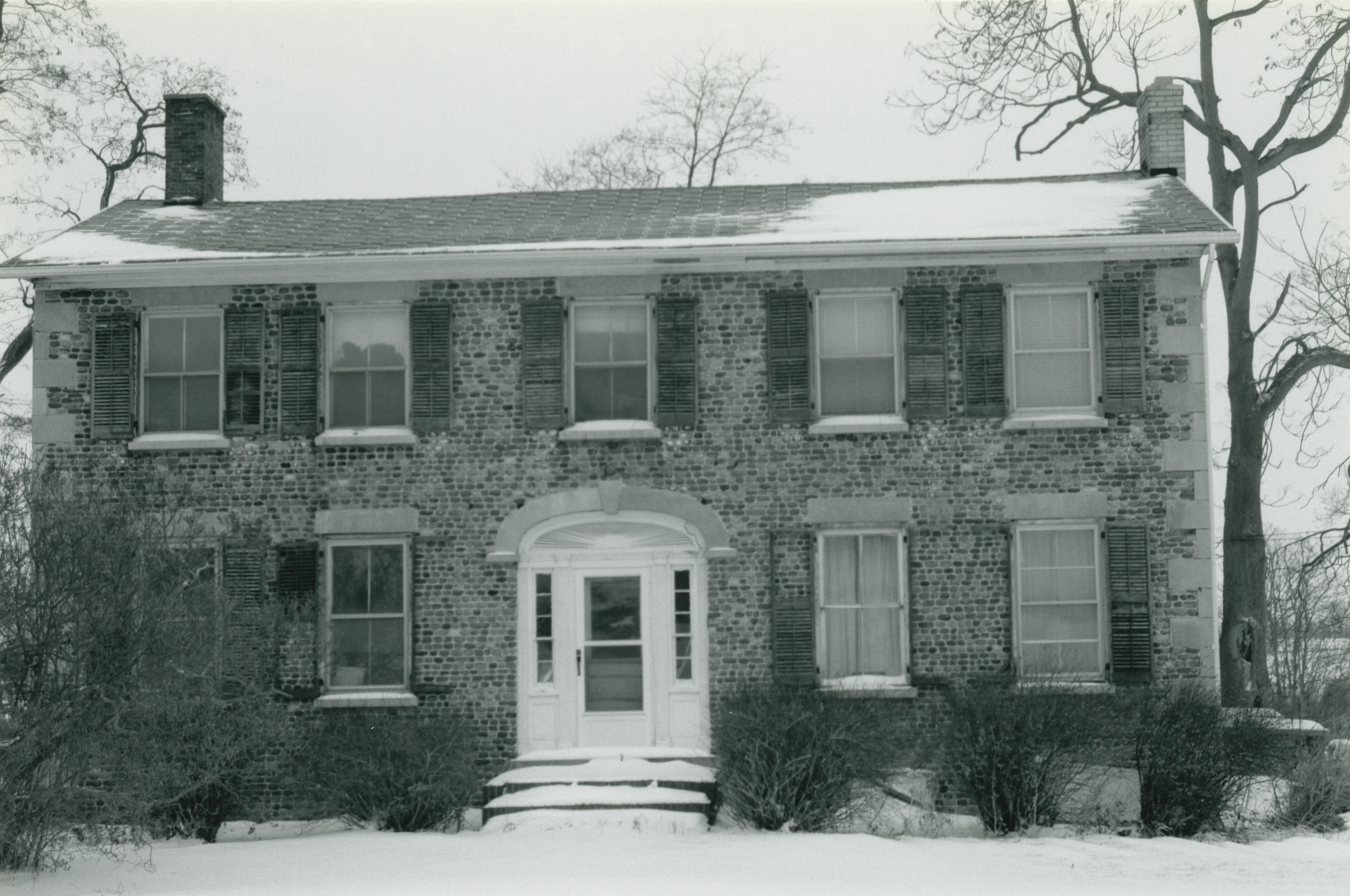
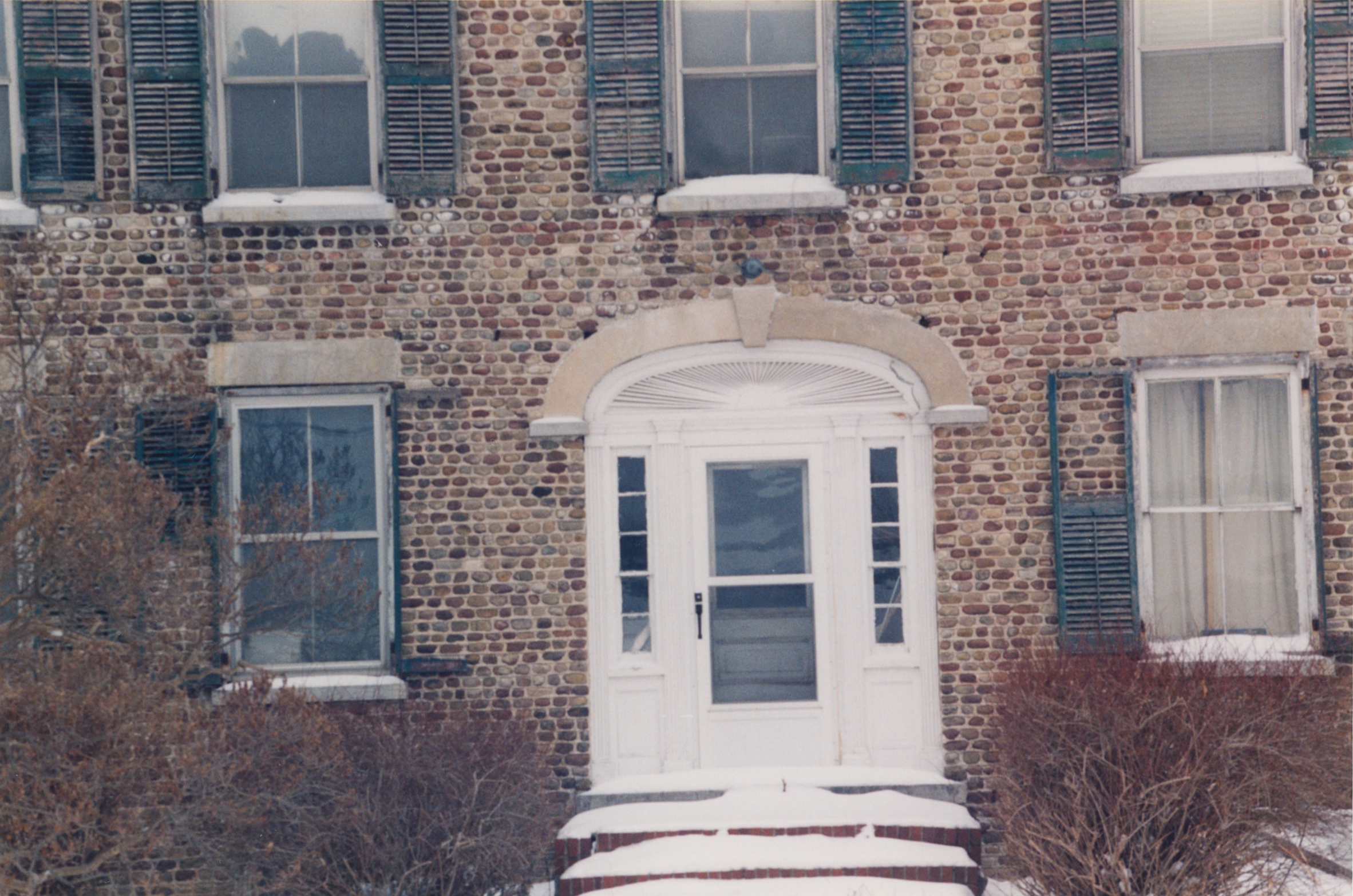
House exterior unaltered on front and sides except for porch steps of early 20th century on south side. New chimney south side, some windows altered (larger Panes).
Barns - Main barn burned 1970. Only one wing remains south of home. Barn to north has hand hewn beams.
Once a 206 acre dairy farm, the house now sits on an eight acre plot and is separated from the adjoining farmland. Most of the original interior remains and is unspoiled. Retains original doors, paneling, pine floors, partitions and fireplaces. The house now has a brown metal roof. A smokestack on the front of the house, shown in some photographs, was removed years ago. At some time in the early twentieth century, a wing of conventional construction was added to the east side of the original cobblestone structure.
Front entrance is distinctive. A measured drawing appears in Carl Schmidt's book, "Cobblestone Masonry", plate 61, Page 289
Transcribed from handwritten notes and correspondence in Cobblestone Museum archives.
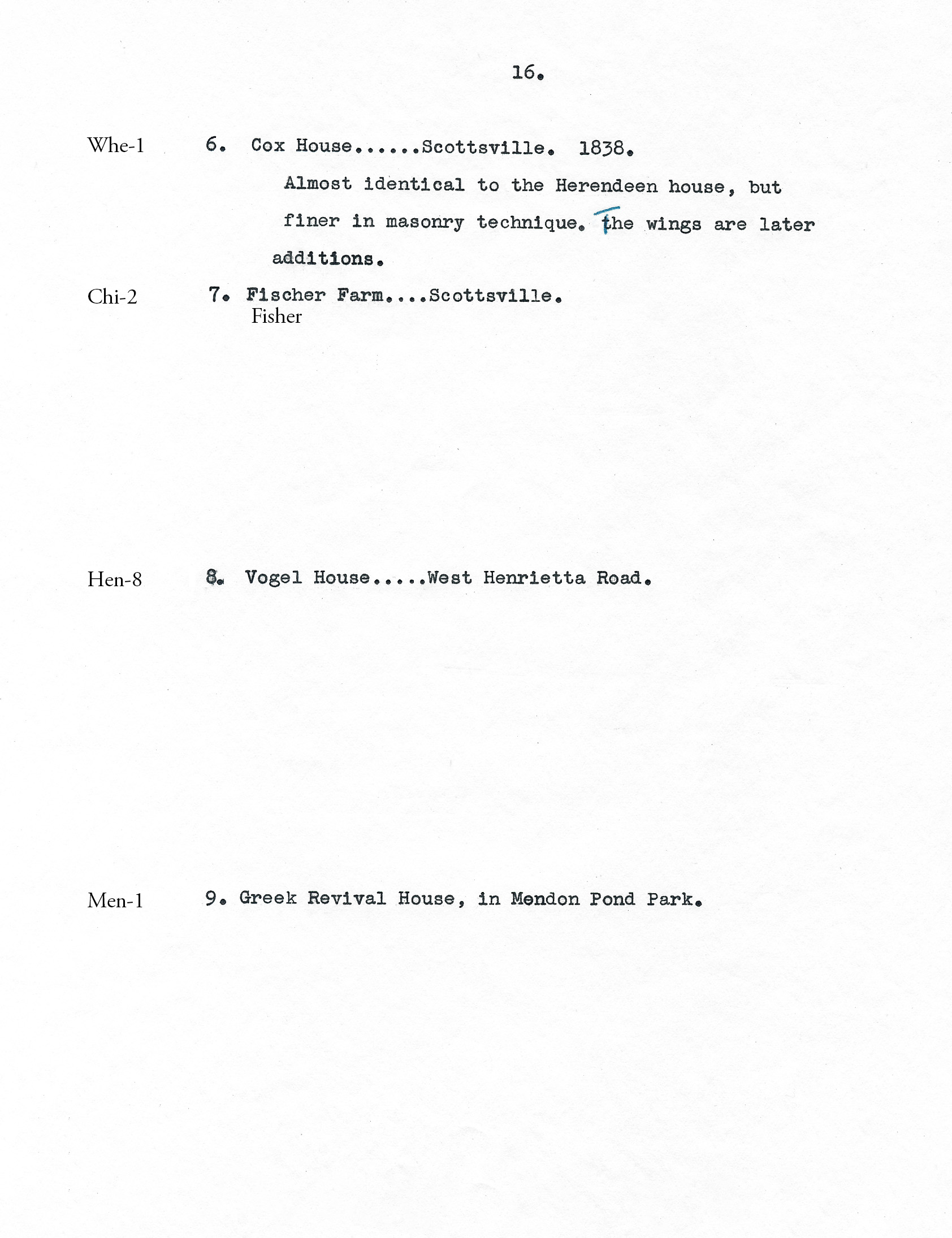
"The Geological Origin of Cobblestone Architecture", by Gerda Peterich. Specific reference to this structure on page 16.
Cobblestone and Folklore", by Doreen Scanlan, a paper for class, Folklore 460, 12/11/1975.
The Cobblestone Society & Museum Tours:
Mr. and Mrs. Abraham Fisher House 11th Annual 06/12/1971
- "Cobblestone Masonry", 1966, Carl Schmidt: Name reference, Pope - Fisher House
- Pages 41-42, Details of Entrance Page 289
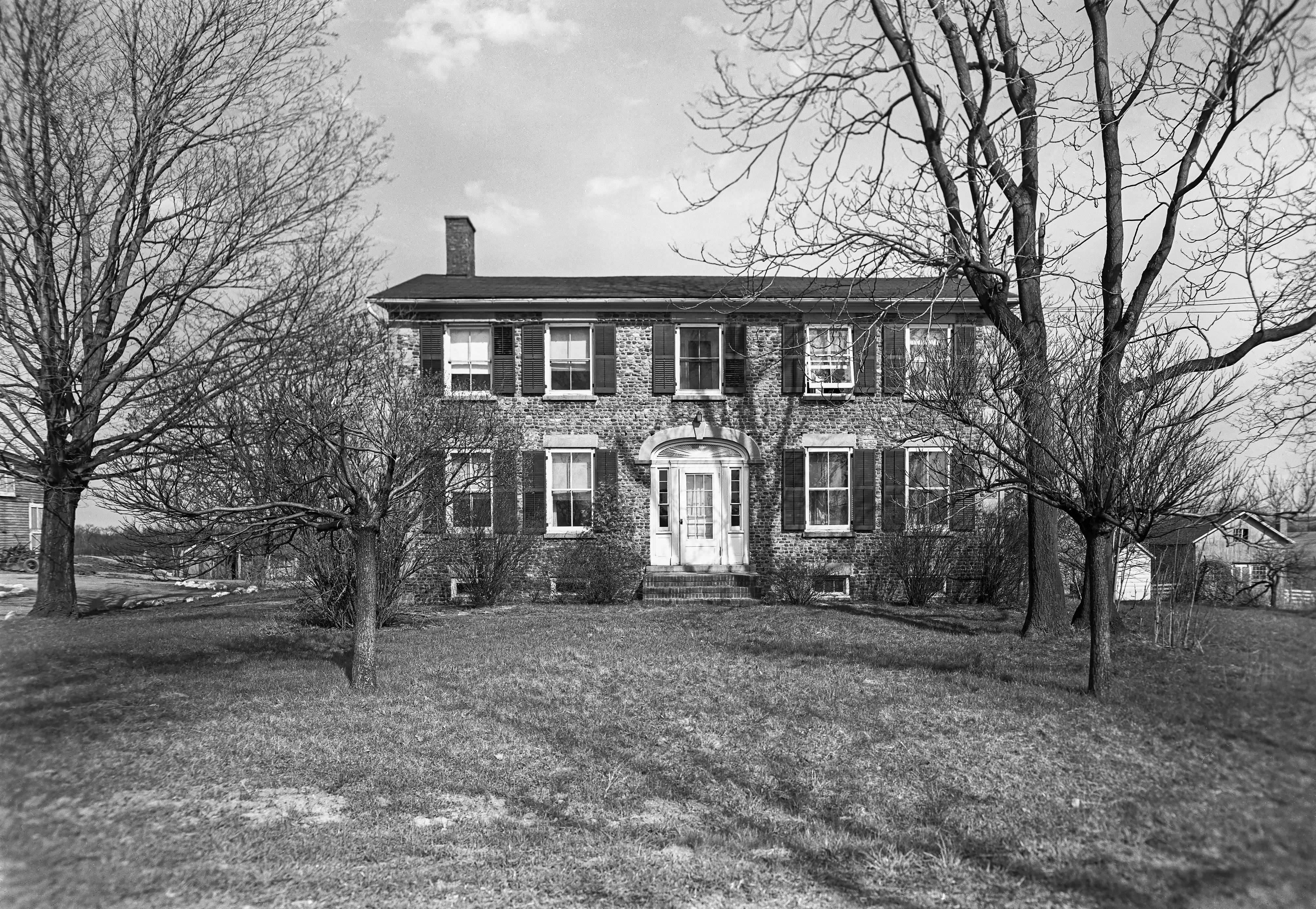
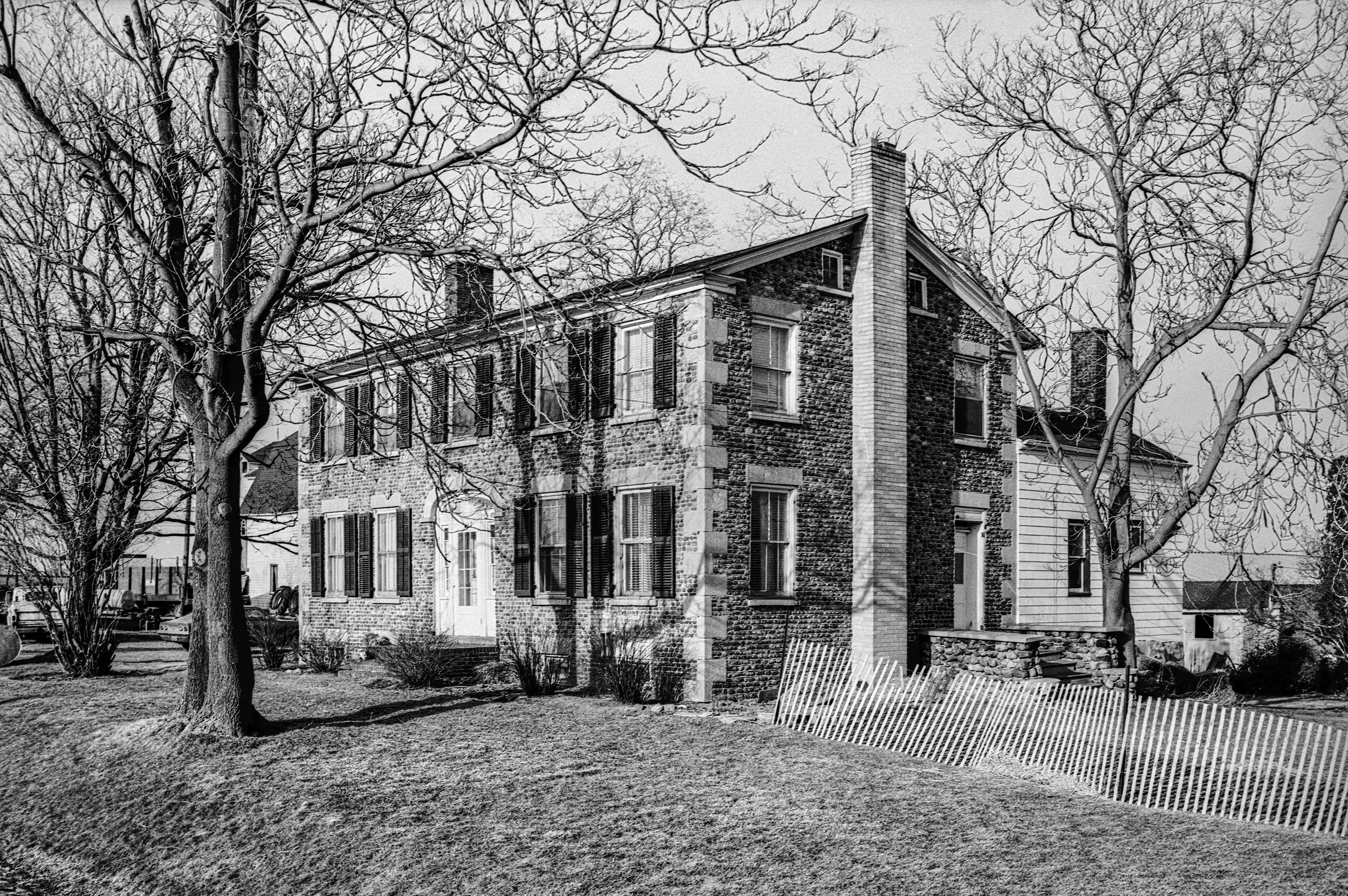
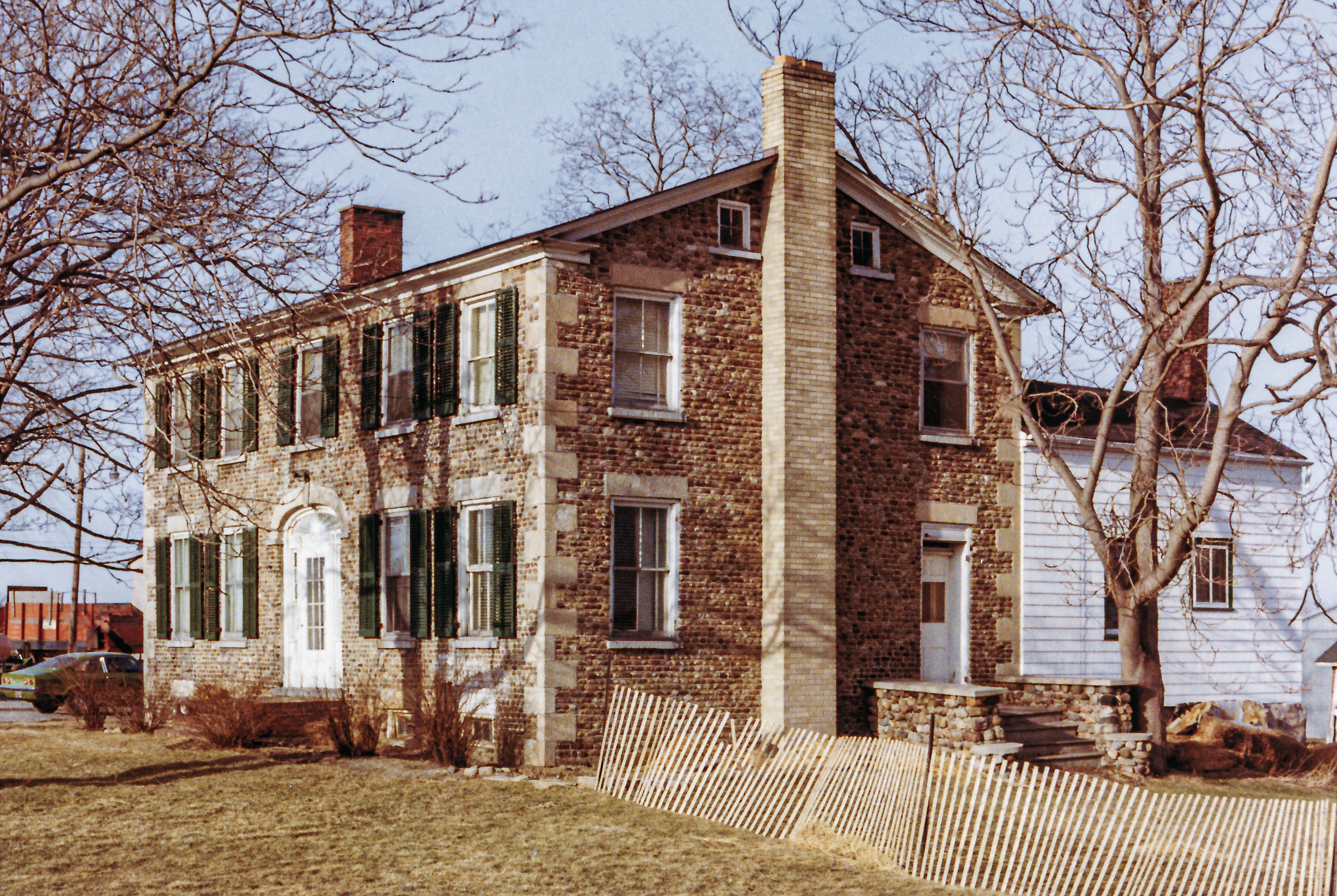
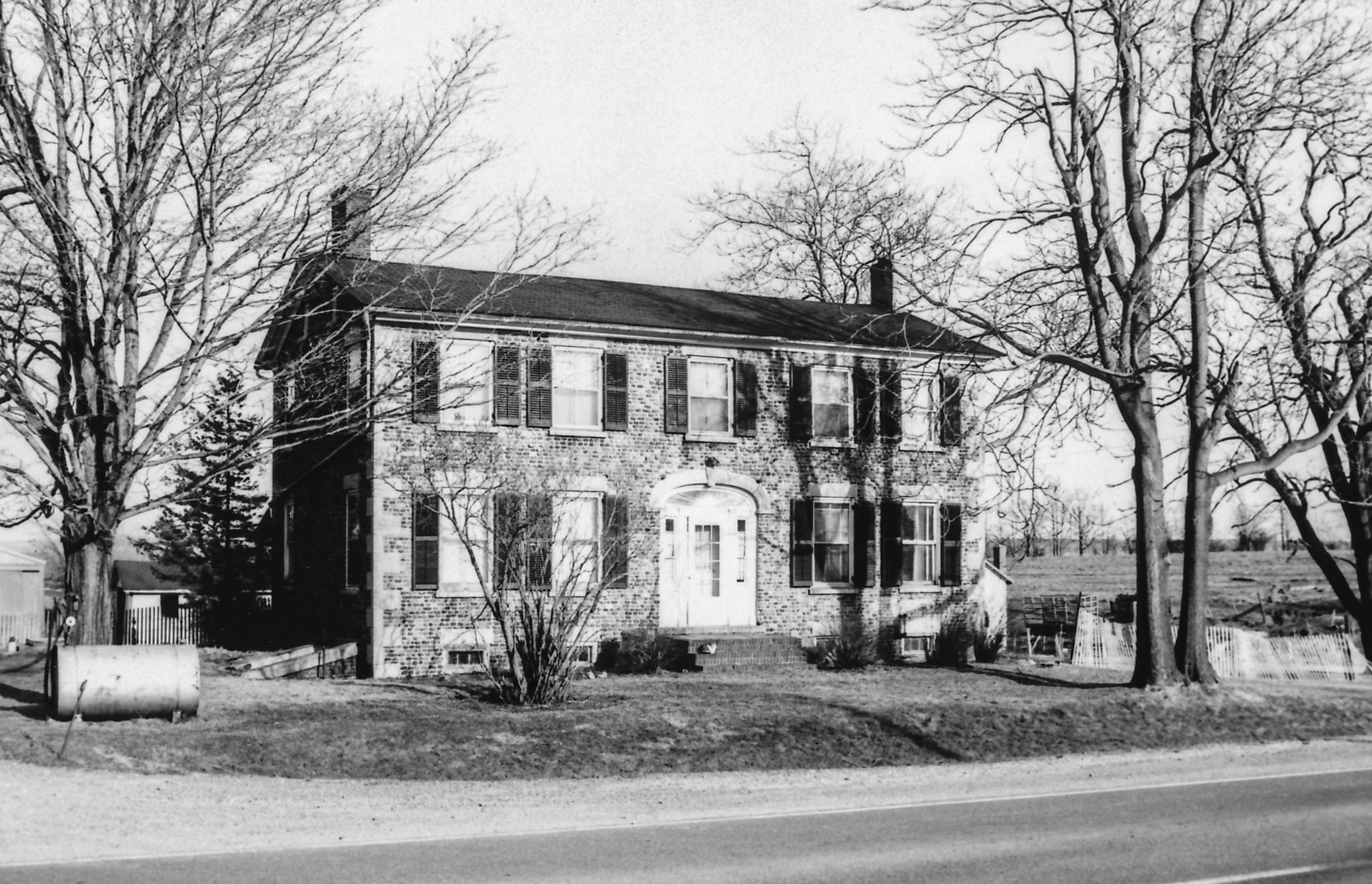
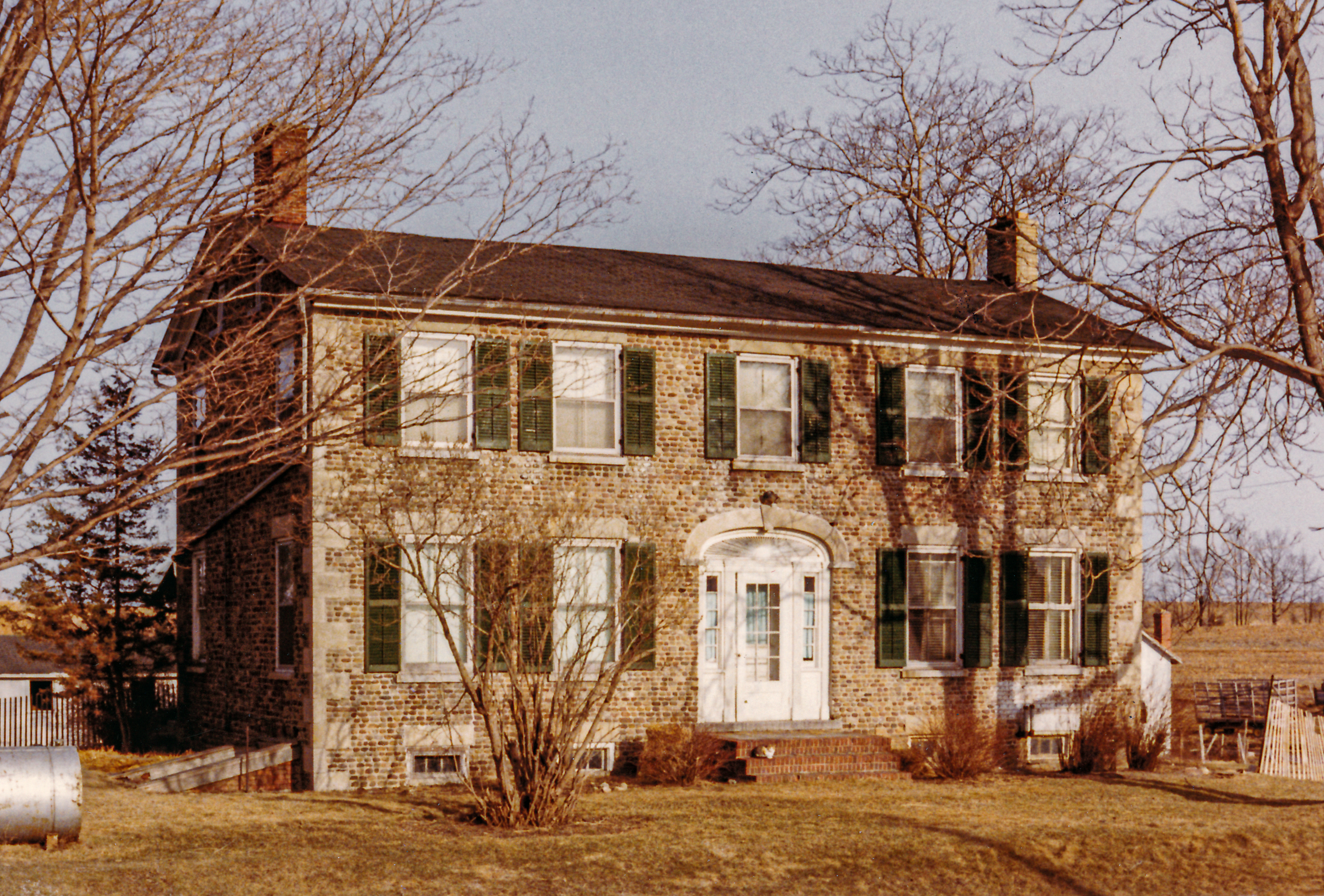
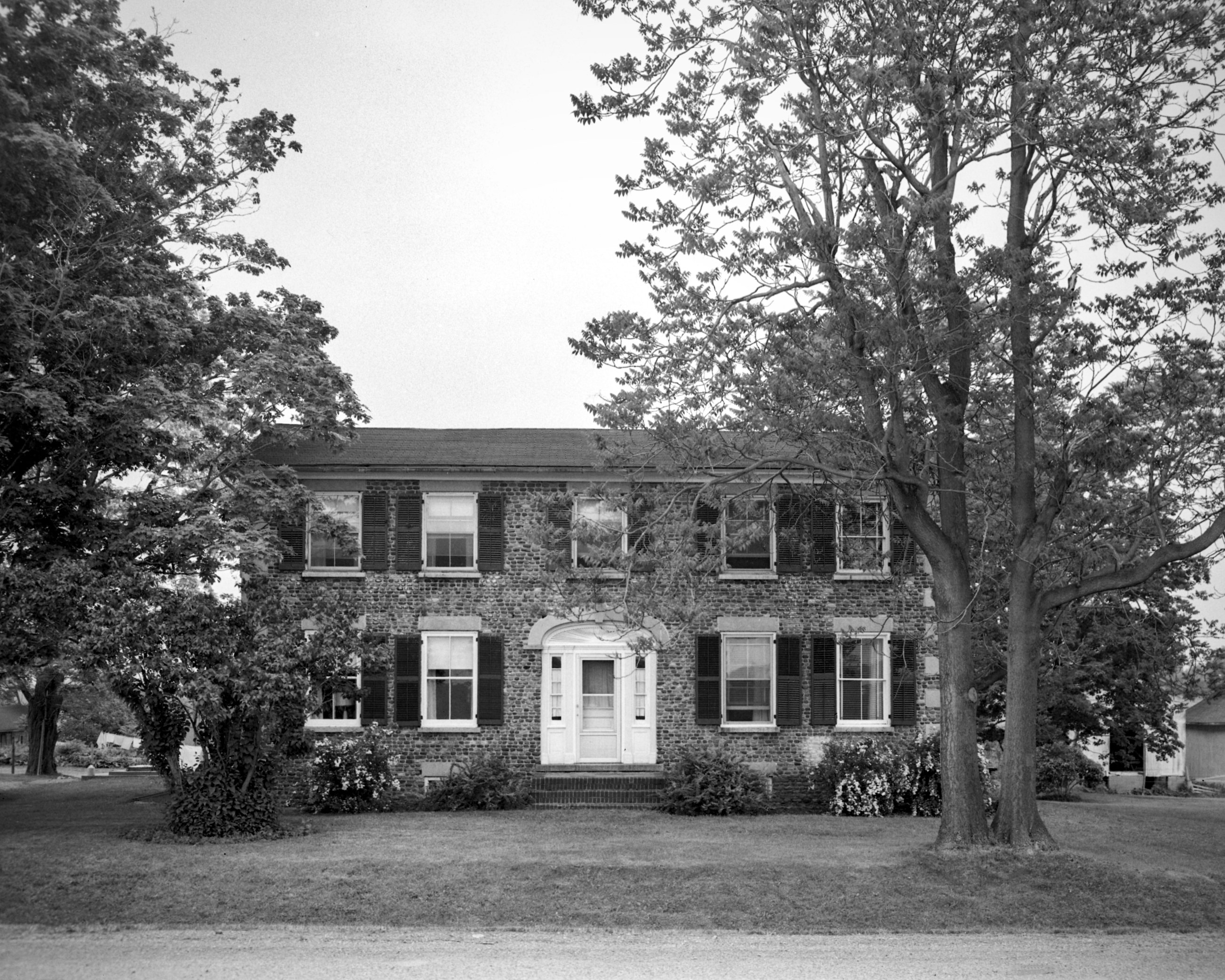
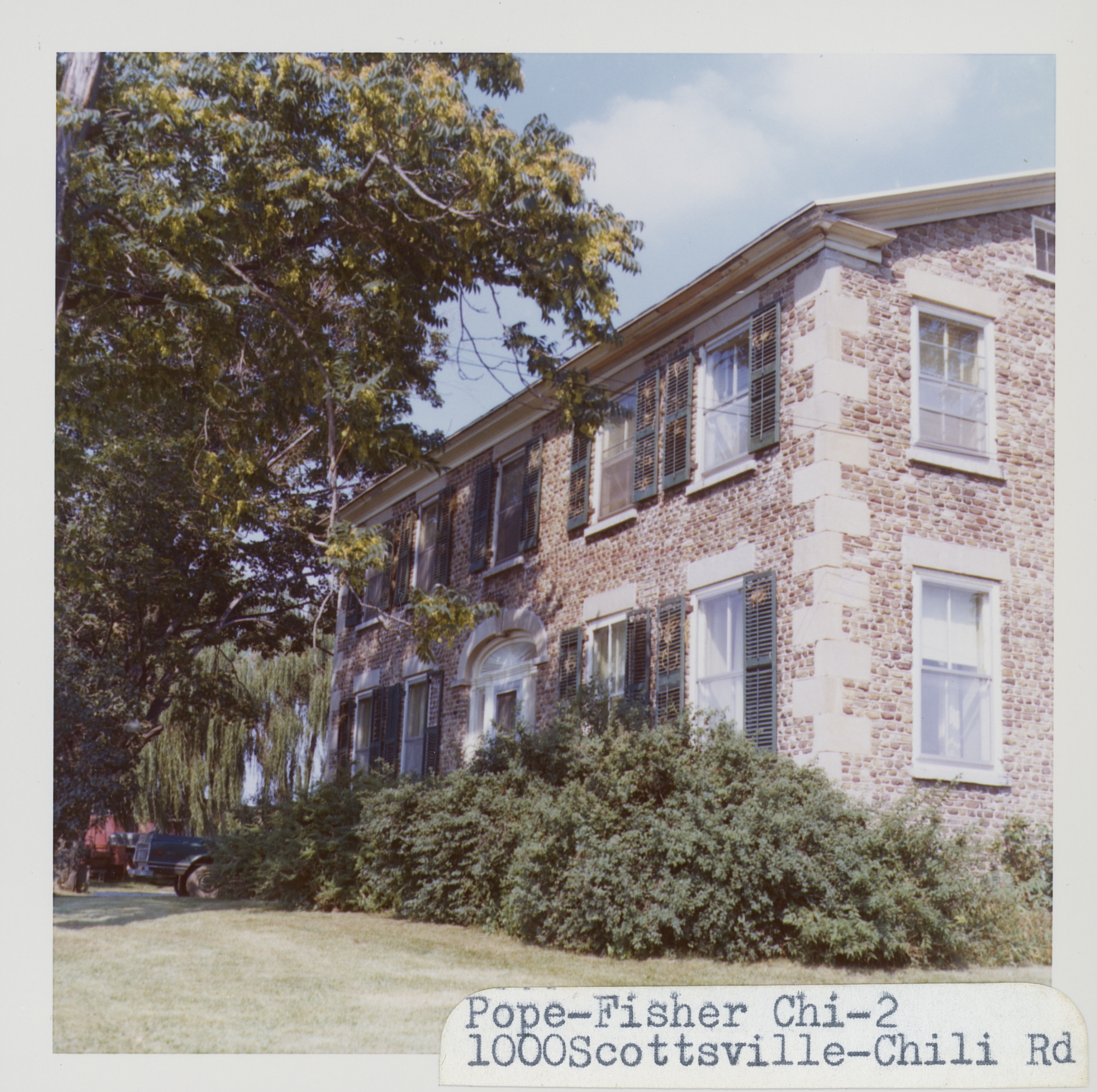
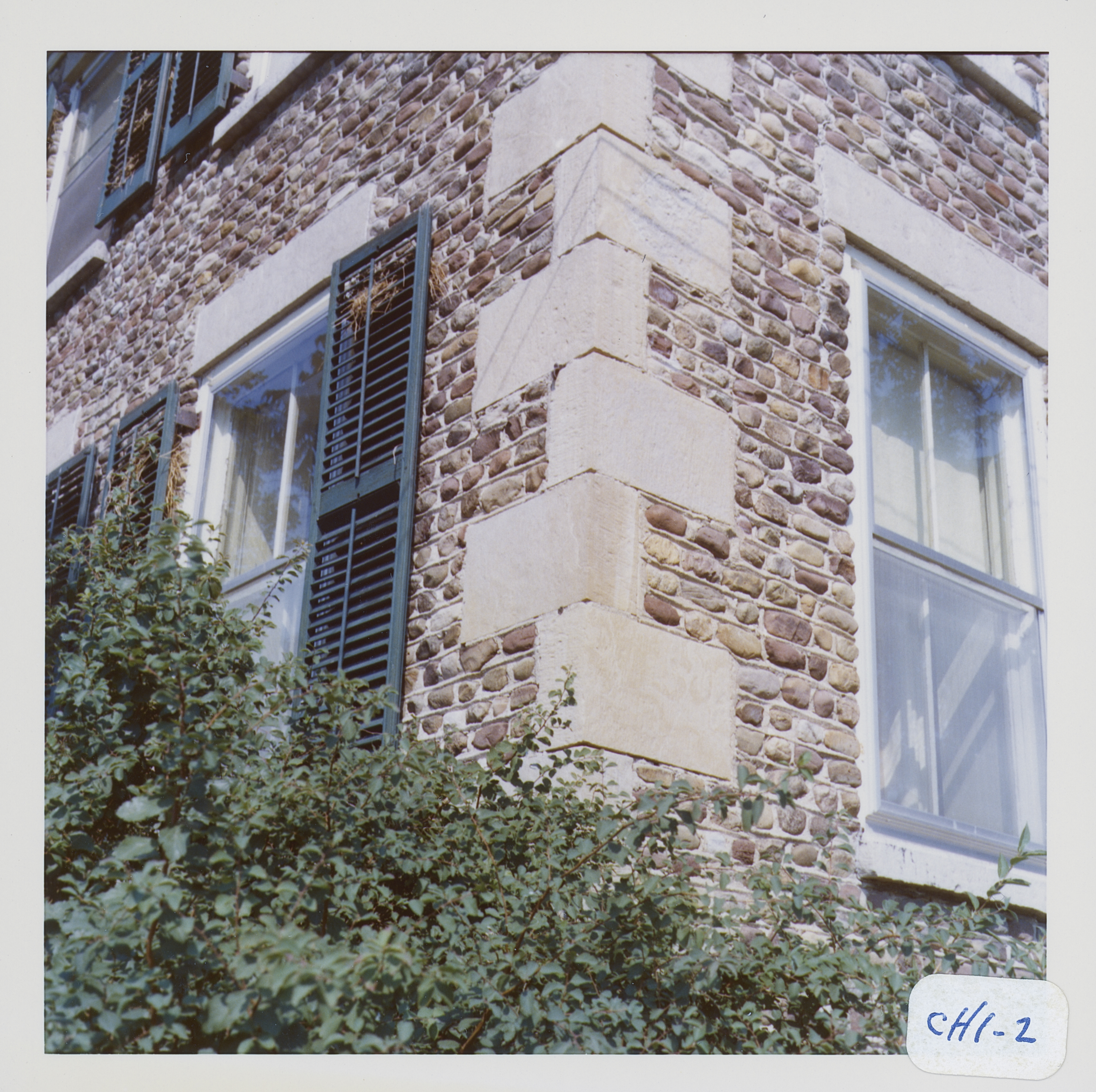
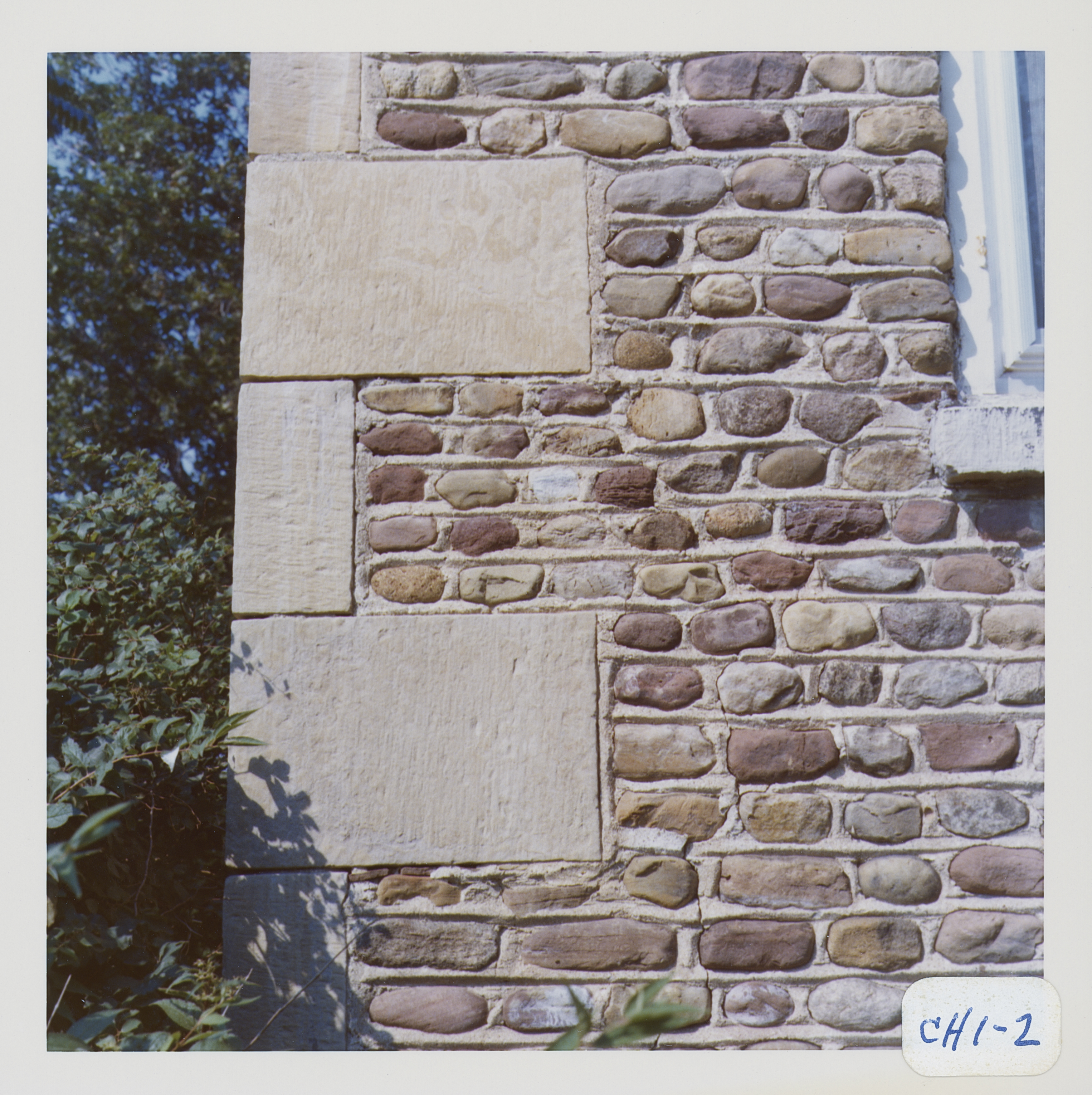
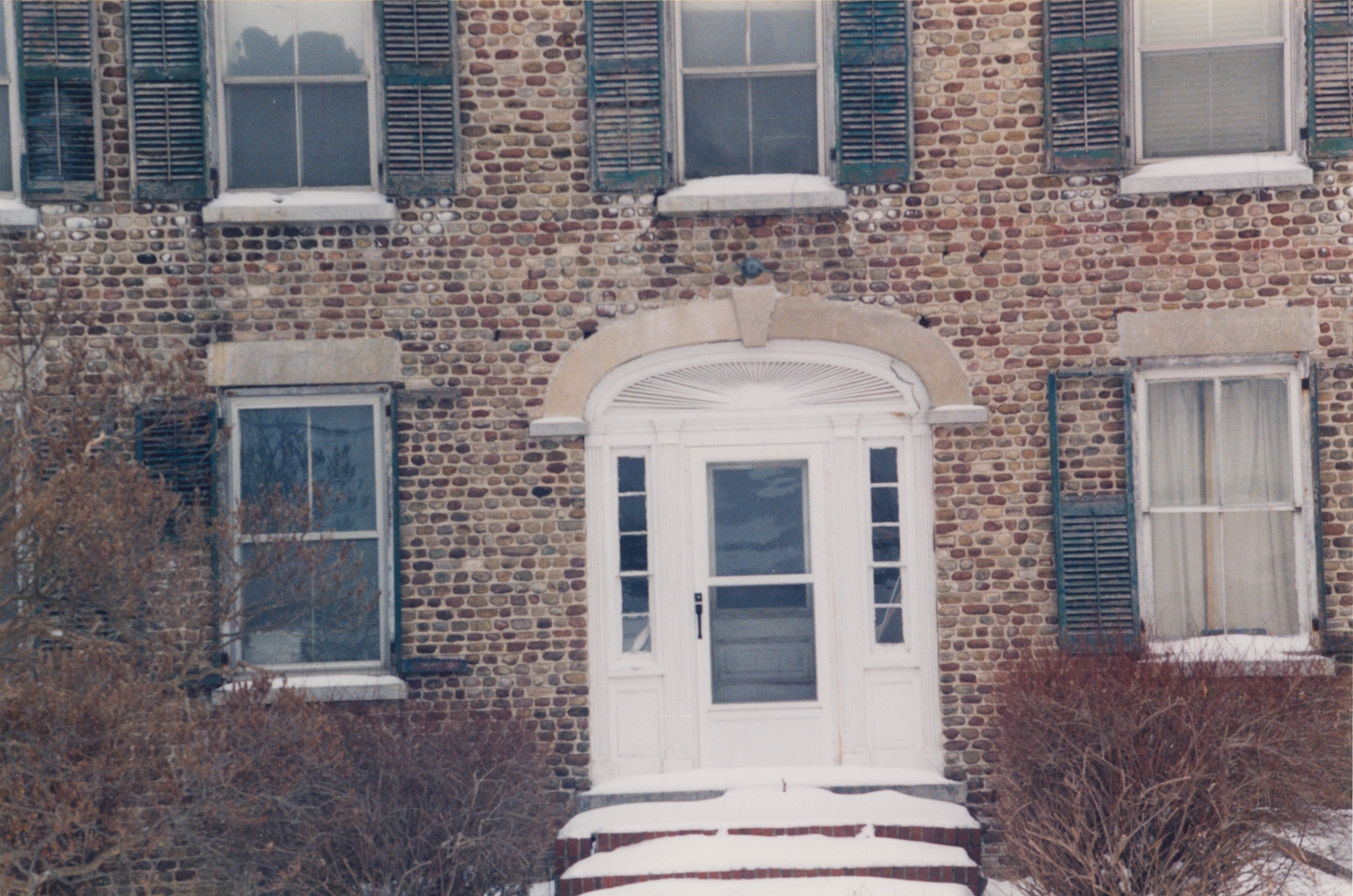
¹ Photography courtesy Gerda Peterich. Cobblestone Museum.
² Image courtesy Cobblestone Museum.
³ Photography courtesy Gerda Peterich.
4 Photography courtesy Richard Palmer.
